Hot or Not? The Surprisingly Murky Science Behind Hot Springs' Famous Water Temperatures
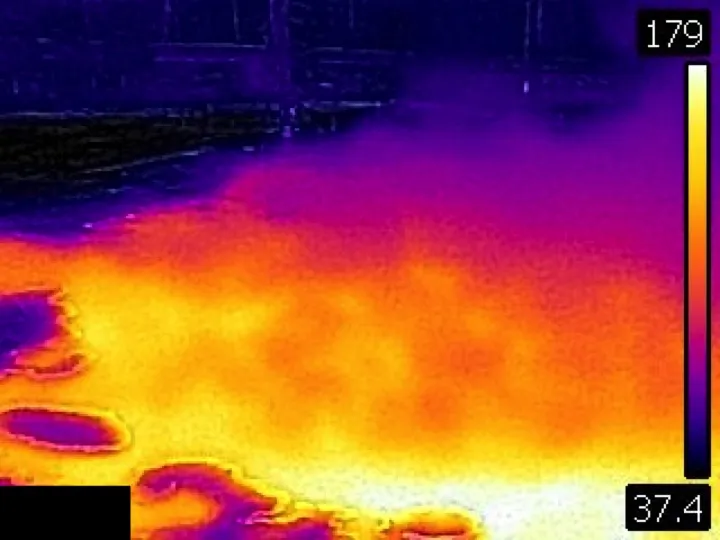
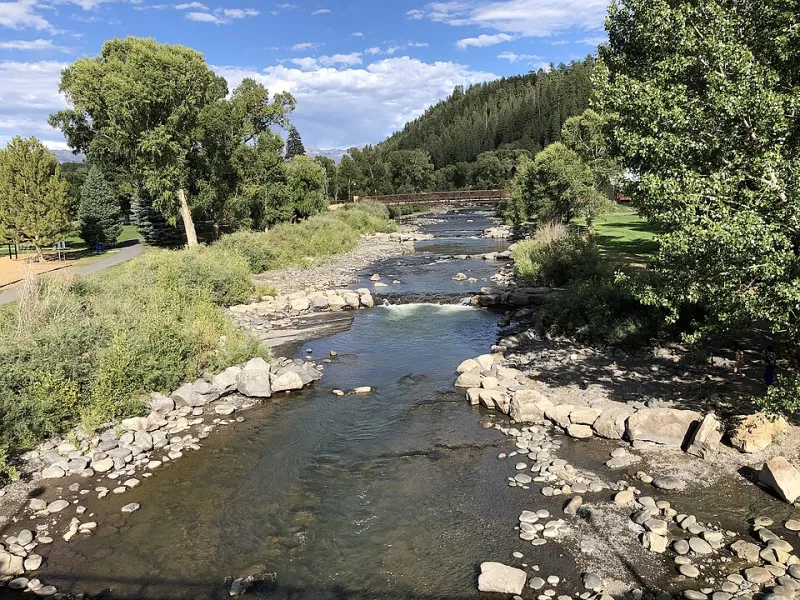
Photo: James St. John, CC BY 2.0, via Wikimedia Commons
Walk down Bathhouse Row on a cool Arkansas morning and you'll see it everywhere — temperature claims printed on plaques, painted on windows, recited by tour guides with total confidence. "143 degrees Fahrenheit." "The water emerges at a steady 143°F." Sometimes it's 147. Sometimes a brochure rounds down to 140. One attraction's signage says "naturally regulated." Another calls it "consistently perfect."
So which is it?
The honest answer, according to geologists, park rangers, and at least a few candid bathhouse operators, is: it depends. And the full story of why it depends reveals something genuinely fascinating about the intersection of geology, history, tourism marketing, and the increasingly high-stakes world of wellness claims.
Where the Number 143 Comes From
The figure most commonly cited — 143°F — has roots in early 20th-century measurements conducted when the federal government was actively managing the springs under what would eventually become Hot Springs National Park. The U.S. Geological Survey recorded temperatures from individual spring outlets, and those readings became the de facto standard that the city's tourism identity was built around.
But here's the catch: those measurements were taken at the source. By the time thermal water travels through a distribution system to a bathhouse tub, it has cooled. How much it cools depends on pipe length, ambient air temperature, the age of the infrastructure, and whether the water has been blended with cooler water to reach a therapeutic temperature. Most bathing pools run somewhere between 95°F and 104°F — a far cry from 143°F, and deliberately so, because 143°F would scald you.
None of that is dishonest, exactly. But it creates a gap between the dramatic number on the sign and the experience a visitor actually has, and that gap is where confusion — and occasionally, frustration — tends to live.
The Measurement Problem Is Older Than You Think
Historical records from the late 1800s show temperature readings that varied by as much as 10 to 15 degrees depending on who was doing the measuring and which spring they sampled. Early entrepreneurs had obvious incentives to report higher temperatures, since hotter water was associated with greater therapeutic potency in the popular imagination of the era. The hotter the spring, the more powerful the cure — or so the marketing logic went.
The National Park Service eventually standardized monitoring of the 47 springs that flow within park boundaries, but the city's private bathhouses and spas draw from a distribution system that mixes water from multiple sources. That blending process makes it genuinely difficult to assign a single, accurate temperature to "Hot Springs water" as a category.
Dr. Malcolm Robins, a hydrologist who has studied the Ouachita Mountains region, put it plainly in a 2019 paper: "The thermal springs of Hot Springs, Arkansas, represent a complex hydrogeological system. Assigning a single representative temperature to the discharge is a simplification that serves communicative purposes but does not reflect the variability inherent in the system."
In other words, 143°F is a useful shorthand. It's just not the whole picture.
Why Bathhouses Tell Different Stories
Spend a weekend visiting Hot Springs' historic bathhouses and you'll notice the temperature claims don't always line up. Part of this is legitimate — different facilities draw water at different points in the distribution system and at different volumes, which affects how much cooling occurs before water reaches the guest. A facility that processes high volume may move water faster, preserving more of the original heat. A smaller operation with older pipes might deliver noticeably cooler water.
There's also the question of what temperature is actually being advertised. Some operators quote the source temperature. Others quote the temperature at the tap. A few quote the temperature of the bathing pool itself, which is typically adjusted for comfort and safety. Without a standardized disclosure requirement, visitors have no reliable way to know which number they're looking at.
One bathhouse manager, who asked not to be named, acknowledged the inconsistency with a shrug. "Everyone's been saying 143 for so long it's just become the number. Does it matter if it's 141 at the source and 102 in the tub? People come here to relax, not to take a physics exam."
That attitude is understandable, but it's also increasingly out of step with where the wellness industry is heading.
The Wellness Scrutiny Problem
Across the United States, wellness tourism is under growing pressure to back up its claims. The Federal Trade Commission has ramped up enforcement around health and wellness marketing, and consumers — especially younger travelers who do their research before they book — are more skeptical of vague therapeutic promises than previous generations were.
Hot Springs has largely escaped serious scrutiny so far, in part because its thermal baths don't make explicit medical claims the way some wellness products do. The experience is sold as relaxation, not treatment. But as the city works to attract a new wave of health-conscious visitors, the gap between marketing language and verifiable fact becomes a more meaningful vulnerability.
Some local voices think it's time for the city to get ahead of the issue. "Hot Springs has an incredible natural asset," said one wellness industry consultant who works with Arkansas tourism clients. "The water is genuinely remarkable — the geology here is legitimately unusual. You don't need to oversell it. Accurate, transparent information would actually be a differentiator right now, not a liability."
What the Park Service Actually Tracks
The National Park Service does maintain active monitoring of spring temperatures within Hot Springs National Park, and that data is publicly available. The most recent figures show source temperatures ranging from roughly 136°F to 147°F depending on the specific spring and seasonal variation. Yes, seasonal variation — groundwater recharge from precipitation can slightly affect outlet temperatures, which is another reason a single fixed number is an oversimplification.
The park's thermal water is also notable for what it doesn't contain: it's remarkably low in minerals compared to many other thermal springs worldwide. This is actually well-documented and scientifically interesting, but it rarely makes it into the marketing copy, perhaps because "low mineral content" doesn't have the same romantic ring as "ancient healing waters."
A City at a Crossroads
Hot Springs is in a genuinely interesting moment. The city has successfully repositioned itself as a legitimate wellness destination after years of relying on gambling tourism and nostalgia. New spas, updated bathhouses, and a growing reputation among health-conscious travelers have given the city real momentum.
But sustainable credibility in the wellness space requires a foundation of honest, verifiable information. The thermal waters here are real, the geology is fascinating, and the experience of soaking in water that has traveled through ancient rock formations for thousands of years is something genuinely worth seeking out. That story doesn't need embellishment.
Standardizing how temperature claims are presented — distinguishing source temperature from delivery temperature from bathing temperature — would be a small operational change with potentially significant reputational benefits. Whether the city's tourism infrastructure has the appetite for that kind of transparency remains an open question.
In the meantime, if you're planning a visit and you see "143°F" on a sign, know that you're looking at a piece of geological history, a marketing legacy, and a number that's both true and incomplete all at once. The water is hot. The story behind it is hotter.