Al Capone Slept Here: The Wild History Behind Hot Springs' Wellness Glow-Up
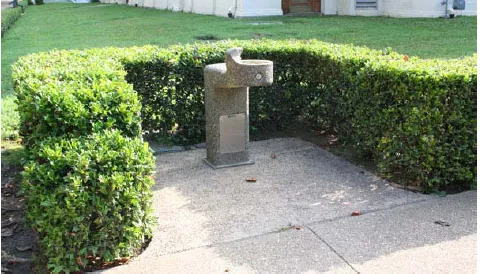
Photo: NPS, Public domain, via Wikimedia Commons
There's a plaque near the Arlington Hotel on Central Avenue that notes, matter-of-factly, that Al Capone used to stay there. Not hide there. Stay there — openly, comfortably, and apparently with the full knowledge of local law enforcement. That detail alone tells you something important about Hot Springs, Arkansas: this is a city that has always operated by its own rules.
Today, Hot Springs is best known as a wellness destination. People come for the thermal baths, the national park trails, the spa weekends. But that identity didn't emerge from nowhere. It was built on top of something much stranger and, depending on your perspective, a lot more interesting. And if you take the time to understand the layers, your visit becomes something richer than just a nice trip to a nice town.
It Started With the Springs — Obviously
Long before European settlers showed up, the Caddo and Osage peoples had been using the hot springs in the Ouachita Mountains for centuries. The waters were considered neutral ground — a place where even rival groups could gather and soak in peace. That spirit of the springs as a shared, almost sacred resource would echo through the city's history in ways that are still visible today.
When the United States government established Hot Springs Reservation in 1832 — making it one of the first federally protected areas in the country, predating Yellowstone by four decades — it was specifically to preserve the thermal springs for public use. The idea was that the water belonged to everyone. The bathhouses that began to spring up along what is now Central Avenue were regulated, their rates set by federal officials, their pipes connected to a central thermal distribution system that still runs under the street today.
By the late 1800s, Hot Springs had developed a reputation as a legitimate health destination. Doctors prescribed "the cure" — a regimen of thermal baths, mineral water drinking, and rest — for everything from rheumatism to nervous exhaustion. Wealthy visitors arrived by train from Chicago, New Orleans, and New York. The bathhouses on Bathhouse Row went up in their current grand forms between 1892 and 1923, each one trying to outdo the last in architectural ambition.
Where Things Got Complicated
Here's where the story takes a turn. Hot Springs was always a bit of a federal gray zone. The reservation status meant certain state laws didn't apply in the same way, and local officials — for much of the city's history — were either complicit in or actively profiting from a thriving illegal economy.
Gambling was the big one. By the early 20th century, Hot Springs had become one of the most wide-open gambling towns in the country. Casinos operated openly on Central Avenue. Horse racing drew crowds from across the South. And the mob found the city extremely hospitable. Capone was a regular. Owney Madden, the New York gangster, liked Hot Springs so much he eventually retired there. Lucky Luciano showed up. Frank Costello was known to visit.
Local political boss Leo McLaughlin ran the city with a combination of charm and muscle for decades, ensuring that the gambling operations stayed protected and the tourist dollars kept flowing. Hot Springs, during this era, was essentially a resort town with a criminal infrastructure — and a lot of people, from bellhops to bathhouse attendants to hotel managers, depended on that economy to make a living.
The federal government finally cracked down in the 1960s, closing the gambling operations and effectively ending an era. The city went into a slow economic decline that lasted for years.
The Reinvention
The turnaround didn't happen overnight. It took a combination of federal investment, local entrepreneurship, and a cultural moment that happened to align perfectly with what Hot Springs had always been.
The National Park Service took over management of the Bathhouse Row structures in 1984, beginning a long process of restoration. The Fordyce Bathhouse reopened as a visitor center and museum in 1989, giving travelers a way to understand the history of the district without the experience being purely commercial. Quapaw Baths reopened after a major renovation in 2008, bringing thermal bathing back to a building that had been closed for decades.
At the same time, American culture was experiencing a broad shift toward wellness — toward thermal experiences, mineral water, spa treatments, and the kind of intentional rest that the bathhouse tradition had always centered on. Hot Springs, which had been doing this for over a century, suddenly found itself ahead of a trend it hadn't even been trying to chase.
The arts community moved in. Restaurants got more ambitious. The city's Victorian architecture, long underappreciated, became a draw in itself. Visitors started coming not just for the baths but for the whole package — the history, the scenery, the food, the quirky identity of a place that had survived boom, corruption, bust, and reinvention.
Why the History Matters When You Visit
Knowing all of this changes how you walk around Hot Springs. When you're on Bathhouse Row, you're not just looking at pretty old buildings — you're standing in the middle of what was once a federally regulated spa district that somehow became a mob vacation spot that somehow became a national park. That's a genuinely unusual trajectory.
When you sip from one of the free thermal fountains near the Fordyce, you're participating in a tradition that stretches back to Indigenous peoples who understood something about this water long before anyone built a building over it.
And when you browse the exhibits inside the Gangster Museum of America on Central Avenue — yes, that's a real place, and it's worth an hour of your time — you're getting the unvarnished version of a story that most tourist destinations would prefer to smooth over.
Hot Springs doesn't smooth things over. That's part of what makes it interesting. The wellness glow-up is real, and the thermal baths are genuinely lovely, but the city wears its complicated past on its sleeve. It's better for it.