Hot Water, Real Results? We Dug Into the Science Behind Hot Springs' Famous Thermal Baths

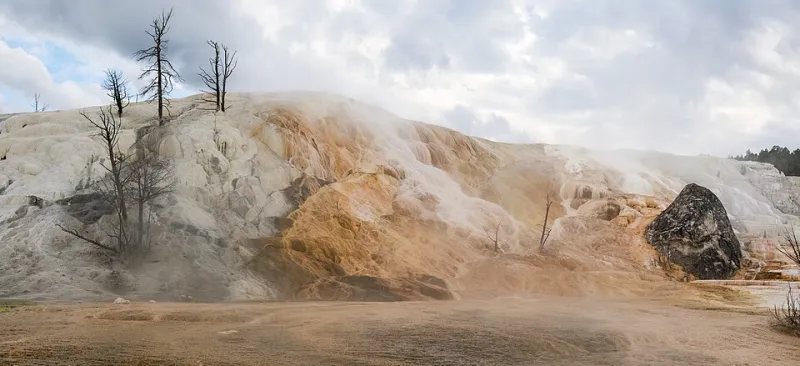
Photo: Tranceliner, CC BY-SA 4.0, via Wikimedia Commons
Walk down Bathhouse Row on any given morning and you'll overhear conversations that sound like they belong in a medical journal — or maybe a wellness influencer's Instagram caption. Visitors describe soaking away joint pain, clearing up skin conditions, and sleeping better than they have in years. The bathhouse attendants nod along knowingly. But is there actual science behind the magic, or has Hot Springs just gotten very good at selling a really nice warm bath?
We spent time talking to people who study this stuff for a living — geologists who've spent careers analyzing the springs, dermatologists who treat skin conditions daily, and spa operators who've watched thousands of guests come through their doors — to get a clearer picture of what thermal bathing actually does to the human body.
Where the Water Comes From (and Why It Matters)
Before we can talk about what the water does, it helps to understand what it is. The thermal springs flowing beneath Hot Springs, Arkansas aren't just hot groundwater. They're the result of a geological process that takes thousands of years.
Rainwater seeps into the earth through the Ouachita Mountains, percolating down through layers of rock — some estimates put the depth at over a mile — where geothermal heat warms it to around 143 degrees Fahrenheit. That water then rises back to the surface through natural fault lines, emerging at Hot Springs National Park at a consistent temperature that hasn't changed much in recorded history.
During that long underground journey, the water picks up dissolved minerals. Hot Springs' thermal water contains measurable amounts of silica, calcium, magnesium, bicarbonate, and small concentrations of other trace elements. The mineral profile is relatively dilute compared to some European spa destinations — think gentler than the sulfur-heavy waters of Bath, England, or the salt-dense pools of the Dead Sea region — but it's far from plain tap water.
"The silica content is particularly interesting from a dermatological standpoint," said one Garland County-based dermatologist we spoke with, who asked not to be named for professional reasons. "Silica has documented roles in skin hydration and collagen support. Whether bathing in it transdermally delivers meaningful amounts is still an open question in the literature, but it's not a crazy claim."
What the Research Actually Shows
Here's where things get nuanced. Balneotherapy — the clinical term for therapeutic bathing — has a surprisingly robust body of research behind it, particularly out of European and Japanese medical institutions where thermal bathing has been integrated into mainstream healthcare for decades.
A 2017 review published in the journal Evidence-Based Complementary and Alternative Medicine analyzed dozens of balneotherapy studies and found consistent evidence for benefits in treating osteoarthritis, particularly in the knees and hands. Patients who underwent regular thermal bathing sessions reported reduced pain scores and improved mobility compared to control groups.
Similar findings have emerged for conditions like fibromyalgia, psoriasis, and certain types of chronic lower back pain. The mechanisms researchers point to include improved circulation from the heat, reduced muscle tension, buoyancy effects that take pressure off joints, and — potentially — some direct skin absorption of minerals, though that last point remains the most contested.
"The heat alone does a lot of the heavy lifting," explained a physical therapist we connected with who works with sports rehabilitation clients in the Hot Springs area. "Warm water immersion increases blood flow, relaxes muscle tissue, and activates the parasympathetic nervous system. You're essentially giving your body a physiological reset. That's not nothing — that's actually quite significant for people dealing with chronic pain."
What the research is less enthusiastic about: claims that thermal bathing detoxifies the body, cures systemic illnesses, or dramatically extends lifespan. Those benefits, popular in older spa-era marketing materials, don't hold up to scrutiny.
How Hot Springs Compares to the World's Famous Spa Destinations
Hot Springs often gets compared to legendary thermal destinations like Baden-Baden in Germany, Rotorua in New Zealand, or the Blue Lagoon in Iceland. The comparisons are fair in spirit, though the waters differ significantly in composition.
Rotorua's geothermal waters are rich in sulfur, which has documented antimicrobial properties — particularly relevant for skin conditions. The Blue Lagoon's silica-heavy, geothermal seawater has been the subject of clinical studies specifically related to psoriasis treatment. Baden-Baden's waters are notably high in radon (a detail that makes modern visitors understandably nervous, though the concentrations used therapeutically are regulated).
Hot Springs' waters fall somewhere in the middle — not the most mineral-intense in the world, but consistently warm, naturally filtered, and remarkably pure by most measures. The National Park Service tests the springs regularly and maintains detailed records of their composition.
What Hot Springs has that many global competitors don't is accessibility and history. The bathhouses here were among the first in the country to offer therapeutic bathing to everyday Americans, not just the wealthy elite. That democratic tradition — people from all walks of life soaking side by side — is part of what makes the Spa City culturally unique.
The Spa Operators' Perspective
The people running Hot Springs' bathhouses today are careful about how they talk about health benefits — and for good reason. Federal regulations restrict what spa operators can claim medically without clinical backing.
At Quapaw Baths & Spa, one of the renovated gems on Bathhouse Row, the focus is on the holistic experience rather than specific medical outcomes. "We're not prescribing treatments," one staffer told us. "We're offering an experience that's been valued for centuries, and we let guests discover what it does for them personally."
Ozark Bathhouse and several of the independently operated thermal pools in the area take a similar approach — emphasizing relaxation, stress relief, and general wellness rather than making specific therapeutic promises.
That measured approach is probably the honest one. The science supports thermal bathing as a genuinely beneficial wellness practice, particularly for musculoskeletal conditions and stress-related issues. It doesn't support treating it as a cure-all.
So Should You Book That Soak?
If you're visiting Hot Springs and wondering whether the bathhouse experience is worth it beyond the novelty factor, the short answer is yes — with realistic expectations.
For people dealing with joint pain, muscle tension, skin conditions, or plain old stress, there's legitimate scientific support for the idea that thermal bathing can provide meaningful relief. The mineral content of the springs adds an interesting dimension that plain hot-tub water doesn't replicate. And the ritual of it — the unhurried soaking, the quiet, the deliberate disconnection from daily life — has its own therapeutic value that's harder to quantify but no less real.
Hot Springs isn't selling snake oil. It's offering something that humans have intuitively sought out for millennia and that modern research is increasingly validating. The Spa City's waters won't cure what ails you, but they might just make you feel a whole lot better — and sometimes, that's exactly what the doctor ordered.